Lindsey Graham War on Iran: Stunning Joy Footage


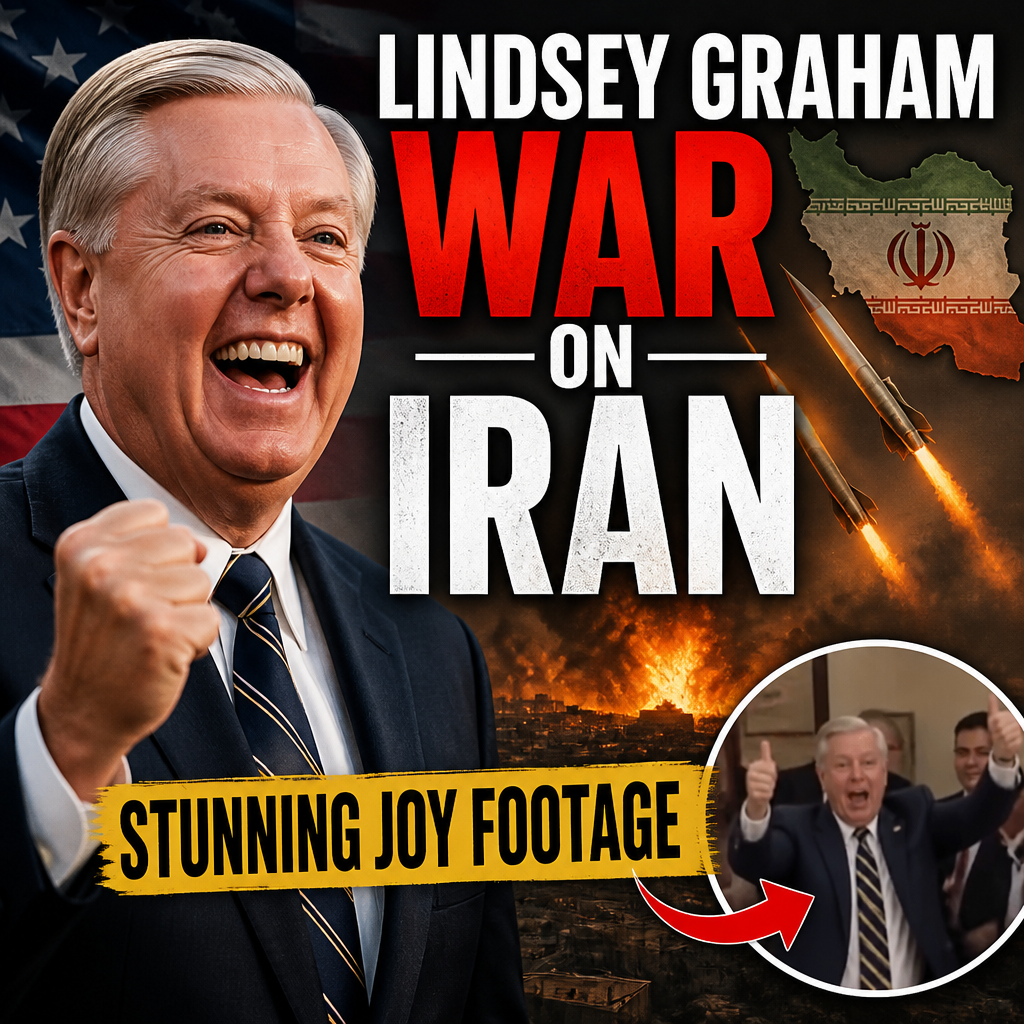
Lindsey Graham war on Iran footage has triggered a fresh round of debate about how far elected officials should go when discussing military conflict, especially when their reactions appear emotional rather than cautious.
The footage at the center of the uproar shows the South Carolina senator responding warmly to images linked to strikes on Iran, with some reports describing him as nearly tearful with joy. That reaction has been interpreted in sharply different ways across the news ecosystem: as proof of a deeply hawkish worldview, as a political performance for a conservative audience, and as evidence of how normalized talk of war has become in parts of Washington. Whatever angle one takes, the episode has clearly landed in a very sensitive place—where foreign policy, public morality, and domestic politics collide.



Lindsey Graham war on Iran and the politics of emotion
The most immediate question is not whether Graham supports toughness toward Tehran; that position has long been part of his political brand. The bigger issue is what it means when a senior senator appears visibly delighted by scenes connected to war. For critics, that kind of reaction is not just unsettling—it is disqualifying. They argue that public servants should treat military action as a grave last resort, not a moment of celebration.
Supporters, however, often see Graham’s posture differently. From that perspective, his reaction reflects a long-standing belief that Iran is a dangerous adversary and that force can be necessary to protect U.S. interests and allies. In that reading, the emotional response is less about bloodlust and more about approval of deterrence, strength, or the idea that an American adversary has been checked.




Still, even among people who favor a hard line on Iran, the optics matter. Politicians can advocate deterrence without appearing exhilarated by destruction. That distinction may sound subtle, but in public life it is crucial. A leader who speaks about war with restraint signals seriousness; one who appears thrilled risks making policy look personal.
Why the reaction matters beyond one senator
The controversy is not simply about Lindsey Graham. It also reflects a wider concern about how Americans process foreign conflict through social media clips, cable commentary, and highly compressed political moments. A short video can become a symbol for an entire worldview in a matter of hours.
That matters for at least three reasons:
– It shapes how voters judge the moral seriousness of elected officials.
– It influences how U.S. policy toward Iran is perceived abroad.
– It feeds domestic polarization by turning foreign policy into a culture-war signal.
In an era when even complex military debates are filtered through viral imagery, a single facial expression or emotional reaction can carry as much political weight as a full speech. That is part of why this episode has resonated so strongly. It does not merely suggest a policy preference; it suggests an attitude toward war itself.
What the coverage suggests across different outlets
Drawing from the range of reporting around the story, there is a clear contrast in emphasis. Some coverage focuses on the senator’s reaction and its symbolic force, treating it as a revealing moment about the mindset of U.S. hawks. Other reporting places it in the broader context of America’s confrontation with Iran, where concerns about nuclear ambitions, regional attacks, and alliance commitments continue to drive calls for pressure.
International outlets tend to frame such moments with more skepticism, especially when they involve celebratory language around military action. That skepticism is understandable. Outside the United States, especially in regions directly affected by conflict, a politician’s enthusiasm for strikes can look less like resolve and more like recklessness. Meanwhile, more domestically oriented commentary often treats the same footage as evidence of partisan predictability: Graham is simply being Graham, a familiar voice in Washington’s pro-military camp.
The truth is probably somewhere in between. It is fair to say that Graham has built a career as one of the Senate’s most consistent Iran hawks. It is also fair to say that the emotional tone of the video has amplified criticism well beyond what a normal policy statement might have drawn. In other words, the content and the optics are both doing work here.
The larger question: deterrence or escalation?
The deeper policy debate is whether hardline rhetoric actually makes conflict less likely. Advocates of pressure argue that demonstrating willingness to use force deters Tehran and reassures partners in the Middle East. Critics counter that theatrical toughness can invite escalation, harden positions, and shrink the space for diplomacy.
That debate is not abstract. It has real consequences for:
– U.S. troops and regional security
– civilians living under the threat of expanded conflict
– diplomatic efforts to prevent broader war
– the credibility of American leadership when it claims to prefer peace
On that point, the reaction to the footage becomes more than a personality story. It becomes a test of whether American political culture can still distinguish between advocating firmness and glorifying violence. The strongest argument for hawkish policy has always been that it is a sober instrument of national defense. Once that posture looks joyful rather than grave, its moral authority weakens.
A fair reading of the controversy
A balanced assessment should avoid two extremes. It would be unfair to pretend that every hawkish reaction to Iran is automatically warmongering in the crude sense. Security threats are real, and policymakers do sometimes need to communicate resolve. But it would also be wrong to dismiss the backlash as mere partisan overreaction. Public officials carry symbolic power, and joy at war footage is a troubling signal regardless of context.
The most reasonable conclusion is that the episode reveals the danger of emotional politics in matters of war and peace. It reminds voters that foreign policy is not only about strategy, but about temperament. The tone leaders set can matter almost as much as the decisions they make.
In that sense, the controversy around Lindsey Graham war on Iran footage is bigger than one senator’s expression. It is a window into a political era in which conflict can be packaged as strength, reaction can outrun reflection, and the line between deterrence and celebration grows uncomfortably thin.